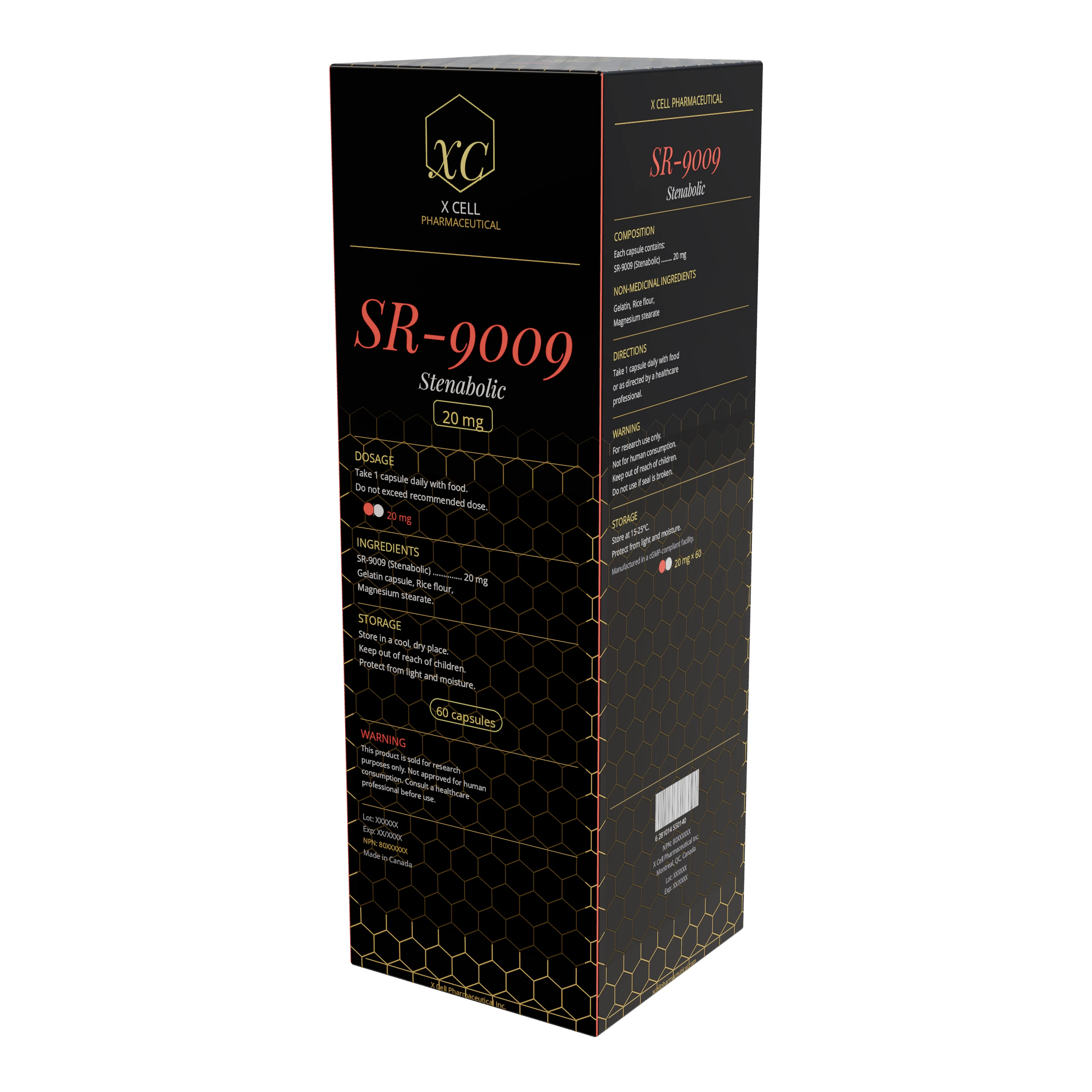
AC-262536
AC-262536
Selective androgen receptor modulator with high anabolic activity and minimal prostate stimulation. Emerging research compound.
Save 10% when you pay in crypto (BTC · ETH · USDT)
Free shipping on orders over $250
Research use only. Products are not intended for human consumption.
We accept
Interac e-Transfer · BTC · ETH · USDT crypto −10%
How ordering works
- 01Place your order — no payment is taken on this site.
- 02Payment instructions arrive by email reply (Interac e-Transfer or crypto).
- 03Paid before 4 PM EST → same-day dispatch with tracking number.
Refrigerated SKU? Ships in an insulated cold-pack mailer. You receive a packaging photograph within 4 hours of dispatch.
- Janoshik verified — per-batch third-party purity testing
- Discreet — plain packaging, no brand markings
- Cold-pack mailer for refrigerated SKUs
- Refund + retest if a batch fails purity
Complete protocols
Build your stack
Stacks that include AC-262536 — protocol components priced together, bulk savings applied automatically.
At a glance
At a glance
- Concentration
- 15mg/ml
- Purity
- 99%+ (HPLC verified)
- Route
- Oral or sublingual
- Storage
- Room temperature, dry, away from light.
Compound profile
AC-262536 is a non-steroidal selective androgen receptor modulator developed by Acadia Pharmaceuticals — the same laboratory that produced ACP-105. It is an emerging research compound distinguished by its highly favorable anabolic-to-androgenic dissociation in preclinical models. AC-262536 demonstrated approximately 66% of testosterone's anabolic potency in skeletal muscle tissue while producing only 27% of testosterone's androgenic effect on the prostate — an anabolic-to-androgenic ratio of roughly 2.45:1 that significantly exceeds testosterone's 1:1 baseline and compares favorably to many established SARMs.
AC-262536 functions as a selective androgen receptor agonist, binding the AR with moderate affinity in muscle and bone tissue. Its selectivity mechanism parallels that of other non-steroidal SARMs: differential tissue-specific co-regulator recruitment results in robust anabolic transcriptional activity in skeletal muscle while limiting androgenic effects in reproductive organs. Preclinical research has also noted potential neuroprotective properties — AC-262536 has been investigated for its ability to reduce neuronal damage in Alzheimer's disease models, with early data suggesting AR-mediated neuroprotective signaling in hippocampal tissue.
While AC-262536 has a smaller research base than established SARMs like Ostarine or LGD-4033, the available preclinical data is consistently positive. Researchers report moderate lean mass accrual, improved muscular endurance, and, notably, a very low incidence of side effects — consistent with its favorable selectivity ratio. Its anabolic output is less aggressive than RAD-140 or LGD-4033, but its minimal androgenic footprint makes it an appealing option for conservative, long-duration research protocols.
AC-262536 is best suited for researchers who prioritize minimal systemic androgenic impact over maximum anabolic potency — beginners exploring SARMs for the first time, researchers running extended-duration protocols where cumulative side effects are a concern, or female researchers seeking low-virilization alternatives. It is also of interest to researchers investigating AR-mediated neuroprotection. For pure muscle-building objectives, more potent SARMs will deliver faster results; AC-262536's value lies in its exceptionally clean side-effect profile.
AC-262536 has an estimated elimination half-life in the range of 12–16 hours, generally supporting once-daily oral administration. Oral bioavailability is good. Testosterone suppression at standard research doses appears to be mild, consistent with its partial androgenic profile. PCT requirements are generally minimal for standard-dose, moderate-duration cycles, though a brief SERM course is advisable for cycles exceeding 8 weeks as a precaution. No hepatotoxicity data of concern has been reported. As an emerging compound, researchers should note that the pharmacokinetic profile is less precisely characterized than established SARMs. Typical research protocols range from 10–30mg daily for 8–12 weeks.
---
*Nova Pharma. Research-grade compounds. Third-party tested. Certificate of Analysis available for every batch.* # Nova Pharma — Peptide Product Detail Page Descriptions
All 45 peptide SKUs. Clinical, authoritative, premium voice. Research language throughout.
---
## Healing & Recovery
How to use
Injection technique, site rotation, and frequency guidance. Typical protocols split the weekly dose into 2 injections.
Dose ranges published in the peptide-research literature vary considerably. Research protocols should be designed by a qualified researcher and use the lowest effective dose consistent with the hypothesis being tested. Half-life determines dosing frequency — shorter half-lives usually require daily dosing, while long-acting analogues tolerate weekly administration.
For compound-specific dose theory, see the half-life dosing math guide and the stacking theory reference.
Independent lab verification
Research disclaimer
For research and laboratory use only. Not for human or veterinary consumption. Nova Pharma sells to qualified researchers of legal age and ships to Canadian addresses only. See disclaimer and terms.
At a glance
At a glance
- Concentration
- 15mg/ml
- Purity
- 99%+ (HPLC verified)
- Route
- Oral or sublingual
- Storage
- Room temperature, dry, away from light.
Compound profile
AC-262536 is a non-steroidal selective androgen receptor modulator developed by Acadia Pharmaceuticals — the same laboratory that produced ACP-105. It is an emerging research compound distinguished by its highly favorable anabolic-to-androgenic dissociation in preclinical models. AC-262536 demonstrated approximately 66% of testosterone's anabolic potency in skeletal muscle tissue while producing only 27% of testosterone's androgenic effect on the prostate — an anabolic-to-androgenic ratio of roughly 2.45:1 that significantly exceeds testosterone's 1:1 baseline and compares favorably to many established SARMs.
AC-262536 functions as a selective androgen receptor agonist, binding the AR with moderate affinity in muscle and bone tissue. Its selectivity mechanism parallels that of other non-steroidal SARMs: differential tissue-specific co-regulator recruitment results in robust anabolic transcriptional activity in skeletal muscle while limiting androgenic effects in reproductive organs. Preclinical research has also noted potential neuroprotective properties — AC-262536 has been investigated for its ability to reduce neuronal damage in Alzheimer's disease models, with early data suggesting AR-mediated neuroprotective signaling in hippocampal tissue.
While AC-262536 has a smaller research base than established SARMs like Ostarine or LGD-4033, the available preclinical data is consistently positive. Researchers report moderate lean mass accrual, improved muscular endurance, and, notably, a very low incidence of side effects — consistent with its favorable selectivity ratio. Its anabolic output is less aggressive than RAD-140 or LGD-4033, but its minimal androgenic footprint makes it an appealing option for conservative, long-duration research protocols.
AC-262536 is best suited for researchers who prioritize minimal systemic androgenic impact over maximum anabolic potency — beginners exploring SARMs for the first time, researchers running extended-duration protocols where cumulative side effects are a concern, or female researchers seeking low-virilization alternatives. It is also of interest to researchers investigating AR-mediated neuroprotection. For pure muscle-building objectives, more potent SARMs will deliver faster results; AC-262536's value lies in its exceptionally clean side-effect profile.
AC-262536 has an estimated elimination half-life in the range of 12–16 hours, generally supporting once-daily oral administration. Oral bioavailability is good. Testosterone suppression at standard research doses appears to be mild, consistent with its partial androgenic profile. PCT requirements are generally minimal for standard-dose, moderate-duration cycles, though a brief SERM course is advisable for cycles exceeding 8 weeks as a precaution. No hepatotoxicity data of concern has been reported. As an emerging compound, researchers should note that the pharmacokinetic profile is less precisely characterized than established SARMs. Typical research protocols range from 10–30mg daily for 8–12 weeks.
---
*Nova Pharma. Research-grade compounds. Third-party tested. Certificate of Analysis available for every batch.* # Nova Pharma — Peptide Product Detail Page Descriptions
All 45 peptide SKUs. Clinical, authoritative, premium voice. Research language throughout.
---
## Healing & Recovery
How to use
Injection technique, site rotation, and frequency guidance. Typical protocols split the weekly dose into 2 injections.
Dose ranges published in the peptide-research literature vary considerably. Research protocols should be designed by a qualified researcher and use the lowest effective dose consistent with the hypothesis being tested. Half-life determines dosing frequency — shorter half-lives usually require daily dosing, while long-acting analogues tolerate weekly administration.
For compound-specific dose theory, see the half-life dosing math guide and the stacking theory reference.
Independent lab verification
Research disclaimer
For research and laboratory use only. Not for human or veterinary consumption. Nova Pharma sells to qualified researchers of legal age and ships to Canadian addresses only. See disclaimer and terms.
Read the research
Reference articles from the lab covering this compound.
best of
Best SARMs for Beginners 2026: Safest First Cycle Options Ranked
Looking for the best SARMs for beginners? We rank the safest first SARM cycle options for 2026 — from Ostarine to AC-262536 — with protocols, dosages, and what to avoid.
compound guides
AC-262536: The Underground SARM You're About to Hear a Lot More About
AC-262536 is a partial androgen receptor agonist gaining traction for lean gains with minimal suppression. Dosage, reviews, and comparison to Ostarine.